
What It’s Really Like to Be a Surgical Care Practitioner in Robotic Surgery

by: Erin Isabelle Lopez

Role & Responsibilities
As a Surgical Care Practitioner, we provide support to the surgical team during the perioperative period. In our Trust, we primarily do bedside assisting for robotic-assisted procedures. We are rotated to different specialities that perform robotic procedures, so I make it a habit to check the day before which list I'll be working on.
A typical day would start with the morning briefing, where the entire surgical team would discuss the patients, the procedures booked on the list, and any concerns about the day ahead. If I require further clarification, I would approach the surgeon and ask about the patient's scan or anticipated difficulties to ensure I can assist as best as possible.
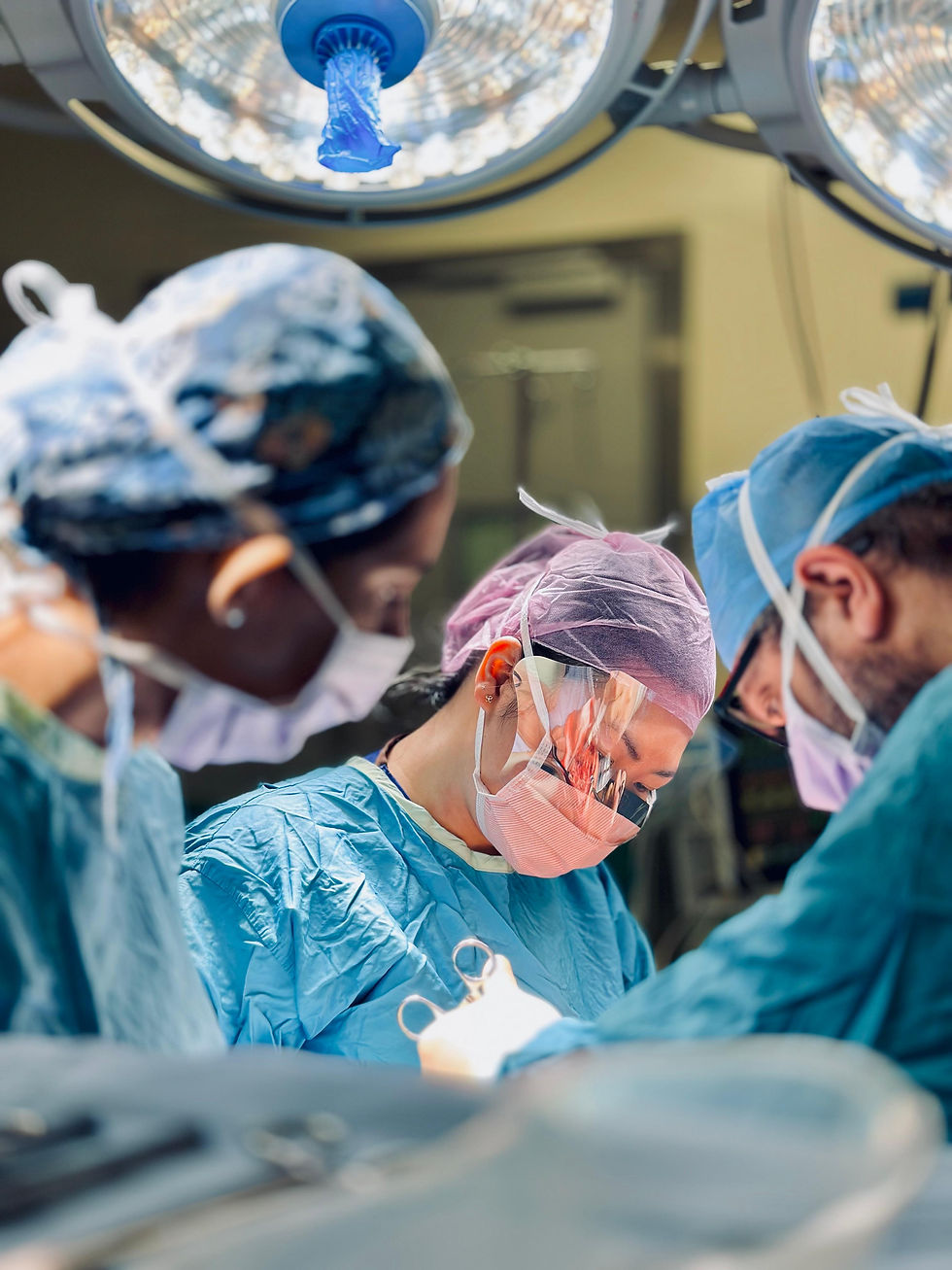
Positioning the patient, inserting the catheter when necessary, prepping, and draping are part of our duties. I help put the ports in and dock the robot arms and instruments. One unique aspect of SCPs in robotics is that we stay by the patient's bedside while the surgeons perform the operation from the console.
I assist the surgeon by retracting tissues, suctioning fluids and keeping the operating field clean, applying Hem-o-lok, and occasionally using staplers. We do the closure with the surgeons, apply wound dressings, and safely transfer the patients to their beds. One could have 1–4 cases a day, depending on the speciality and type of procedures booked, so we do as much as we can to support the efficiency of the list.
Patients and Specialities
I cross-site between two hospitals, and we cover Transplant, Renal, Urology, Thoracic, Colorectal, Gynaecology, and Upper GI. Most are cancer patients, but we do have a colorectal list for IBD patients and maybe in the near future, benign Gynaecology.
Contribution to the Wider Healthcare Team
The SCP programme in our trust has supported the training of our colleagues since it began. Residents and fellows rotate in their placement and may not have experience handling the robot. Meanwhile, SCPs are constantly in the theatre and can teach surgical trainees how to dock, operate and troubleshoot the robot from the bedside.
We help learners develop surgical skills, such as laparoscopic and suturing skills. Additionally, we contribute to the training of scrub nurses when they are new to scrubbing for the procedures.
As the bedside assistant, we’re literally in the middle of the theatre, which is optimal as the link between the surgeon, scrub team and anaesthetic team. Besides the clinical, educational and leadership aspects of our role, we also participate in service improvement. Recently, we conducted a service evaluation of the costs and expenses associated with robotics in the trust.

Career Path & Application
I've always wanted to be in the operating theatres and, fortunately, I have been able to do that since I started working. We were in the early days of our robotics programme in our hospital when I met and saw a senior SCP from the sister hospital assist with our case. I was amazed by how knowledgeable and skilful he was.
The surgeon was even asking him for advice on how to proceed with a step in the operation. That's when I learned of the SCP pathway for nurses.
A senior SCP told me that the post was out, and I applied for it. Training was an integration of clinical practice and academic study. I am grateful to have been supported by my senior colleagues, surgical fellows and consultants who served as mentors during training and even until now.
I was a Band 6 in the robotic theatre when I applied, which worked to my advantage as I had training and experience working and troubleshooting the Da Vinci. I have also completed a Level 6 Perioperative course beforehand, which would later be a prerequisite to apply for a place in the MSc programme. The MSc in Surgical Care Practice is a 3-year course (used to be 2 years until the recent curriculum update) required to be a qualified SCP.
Joys & Fulfillment
I appreciate the variety of cases that I get to see and assist with. It's both a pro and a con. Assisting for multiple specialities can be overwhelming. I keep notes of surgeons and their preferences for various procedures they do. But that builds the rapport, confidence and trust between you and your surgeon, which helps in making the operation smooth and less stressful.
I could be assigned to Thoracics on Monday, Transplant on Tuesday, Urology on Wednesday and then Gynaecology on Friday. But at the same time, it's non-monotonous and interesting, and every day is a learning day. You pick up surgical techniques from watching other surgeons, which you could suggest to a learning consultant or fellow. It also helped me relate the different systems of the body. For example, when I started learning robotic-assisted minimally invasive oesophagectomy, I was already familiar with the thoracic part of the procedure, having been doing robotic-assisted thoracic surgery.
I am very grateful for a supportive and excellent SCP and scrub team. Even on difficult days, they make it bearable — with a bit of humour along the way. It's rewarding when patients go home after 1-3 days post-op (compared to longer hospital stays if it were open), knowing the team worked together in keeping the patient safe.

Memorable Moments
There are many memorable patients/moments, but the most recent one was my first Robotic-assisted Kidney Transplant. The patient received a kidney from his partner.
When I was reflecting at the end of the day, I realised, “Hey, I assisted with something amazing today.” I got to hold the kidney and place it inside the patient. I assisted as the arteries and veins were being anastomosed, and the kidney turned a pinkish colour.
I never thought seeing urine come out of the ureters would bring relief (haha). And this patient, who’s close to my age, would have a working kidney and not have to undergo the whole process of an open surgery, would be in less pain and have a faster recovery.
Professional and Personal Growth
Professionally, becoming an SCP has expanded not only my clinical skills, but also my non-technical skills. You’re trained and expected to be like a surgical resident. The role came with heavier responsibilities for patient safety, as my actions directly affect them.
Working with more autonomy also increased my accountability to act within my scope of practice. I’m inherently shy, but I developed (and still developing) my leadership, communication and teaching skills to be able to work collaboratively with the surgical team.
Personally, my time management and self-discipline needed to be better to balance studying the Master's programme and work at the same time. I feel a sense of pride and fulfilment that, as an SCP, I can perform tasks that used to be only done by medical professionals.
I’m more resilient and adaptable to cope with a high-pressure surgical environment, always on alert for emergencies. Overall, I gained more self-confidence in my capabilities as a person.
Challenges & Realities
It could be difficult to speak up at times, especially when you’re unsure and doubting yourself. When this happens to me, I muster all my courage to ask. At the end of the day, it’s for the patient, and the surgeon would (hopefully) appreciate it. Repeating the advice that was given to me, it's better to have spoken than to let a mistake affect the patient's outcome.
Another is not having a standardised, clear-cut scope of practice. The curriculum framework provides a guideline for procedures that SCPs can perform. However, it also depends on the Trust policy. As a practitioner, only perform tasks you have evidence of competency, are trained and confident to execute.
I believe having been trained in the Philippines helped me deal with stressful situations! Surgeons would usually inform you and the team that they expect the case to be complex. But cases thought to be straightforward could unexpectedly turn difficult as well.
I set my expectations and anticipate what would be needed in terms of instruments, kits or haemostatic agents, etc. I also know my limitations and when to ask for help from the residents or my senior colleagues.
Early on, I was told that not every day will be a good day. I remember, it was actually Valentine's Day! I had just started doing solo lists. It felt like everything I was doing was wrong, and the surgeon kept telling me off. I was getting emotional, but I took a deep breath, concentrated even more and whatever he said after that would enter one ear and come out of the other. I focused on doing my best and keeping the patient safe.
That also highlighted the importance of communication in robotic-assisted surgery. Surgeons cannot see what’s happening in theatres when they are on the console. Hence, communicating my challenges in assisting, such as clashing instruments or not being able retract or reach with the suction in certain angles, lessens their frustration and mine.
It’s also helpful to have colleagues to brainstorm with, vent to or debrief with after complex procedures or just a bad day.
Addressing Misconceptions
One misconception is that SCPs take away training opportunities from surgical trainees. I believe the opposite and that we support and complement their training.
Having SCPs on the bedside gives the fellows more time to train on the console. We guide surgical trainees in manipulating the robot, laparoscopic and suturing skills.

Advice & Progression
The Royal College of Surgeons England has the curriculum framework for Surgical Care Practitioners, guidance on the roles and responsibilities and a list of accredited universities that offer the Master's programme. The Association of Surgical Care Practitioners website also contains information and provides a platform for SCPs or people who would like to explore the role.
A resource person could be the sales representative of your robotic platform. Intuitive has an online training you can sign up for.
One must be resilient, physically and mentally. You could be standing for long periods, shoulders and hands are hurting, 2 to 3 cases a day. Be comfortable receiving feedback and reflecting constructively. Be open to learning, and that competence is gradual and different with everyone.
Strengthen your clinical knowledge and start being curious about the hows and whys of the operation. Gain as much experience as a scrub, circulating and team leader.
Don’t be afraid to ask the people who are doing it. Express your interest to them. Feed your curiosity, read about the Surgical Care Practitioner role and what it entails, and observe the SCPs in your trust, so you have an idea if it’s a pathway you want to pursue. It won’t be easy, but don’t let that discourage you because the hard work pays off.
If you're about to start your training or in the middle of it, remember, "You are braver than you believe, stronger than you seem, and smarter than you think" (A.A. Milne). Best of luck! 😉


Helpful and well-written content. Many users often wonder about the best way for instagram reels download, and this post explains the topic clearly. It’s always good to find guides that are easy to follow and genuinely useful.
day trading for beginners, Thank you so much for your kindness and support. I truly appreciate the time, effort, and care you shared. Your help made a real difference and means more than I can say. I’m grateful for you and everything you’ve done, and I will always remember your generosity and warm spirit.
I read your post about what it’s really like to be a surgical care practitioner in robotic surgery and it gave a clear inside look at how teamwork, tech, and steady focus come together in that field. When I was finishing a long school paper I once used Fast research proposal editing support as something I had personally used late one night to fix confusing parts before turning it in and it helped me catch mistakes I missed at first. It reminds me that quick, careful support and attention to detail make tough challenges feel more manageable and real.